Factory-fresh
Type approval
The manufacturer certifies an entire model. Every unit that comes off the line afterwards is automatically road-legal. The rulebook describes exactly this vehicle.
RegTech for vehicle homologation
Autocomply checks expert reports for modified vehicles against all four levels of regulation: the law, the technical rule sheets, lived inspection practice and the consensus of the inspection bodies. Every finding cites its source. A rules engine makes the call, not a language model.
Our conviction
Regulatory truth is not the legal text. It is the interpretation accepted in practice.
Every regulated industry has a formal rulebook. Whether something passes or fails is decided by the person who interprets it: the inspector, the auditor, the certifying body. Between the written rule and the lived interpretation lies a gap. It is wide and expensive. Autocomply closes it.
The problem
Factory-fresh
The manufacturer certifies an entire model. Every unit that comes off the line afterwards is automatically road-legal. The rulebook describes exactly this vehicle.
After the modification
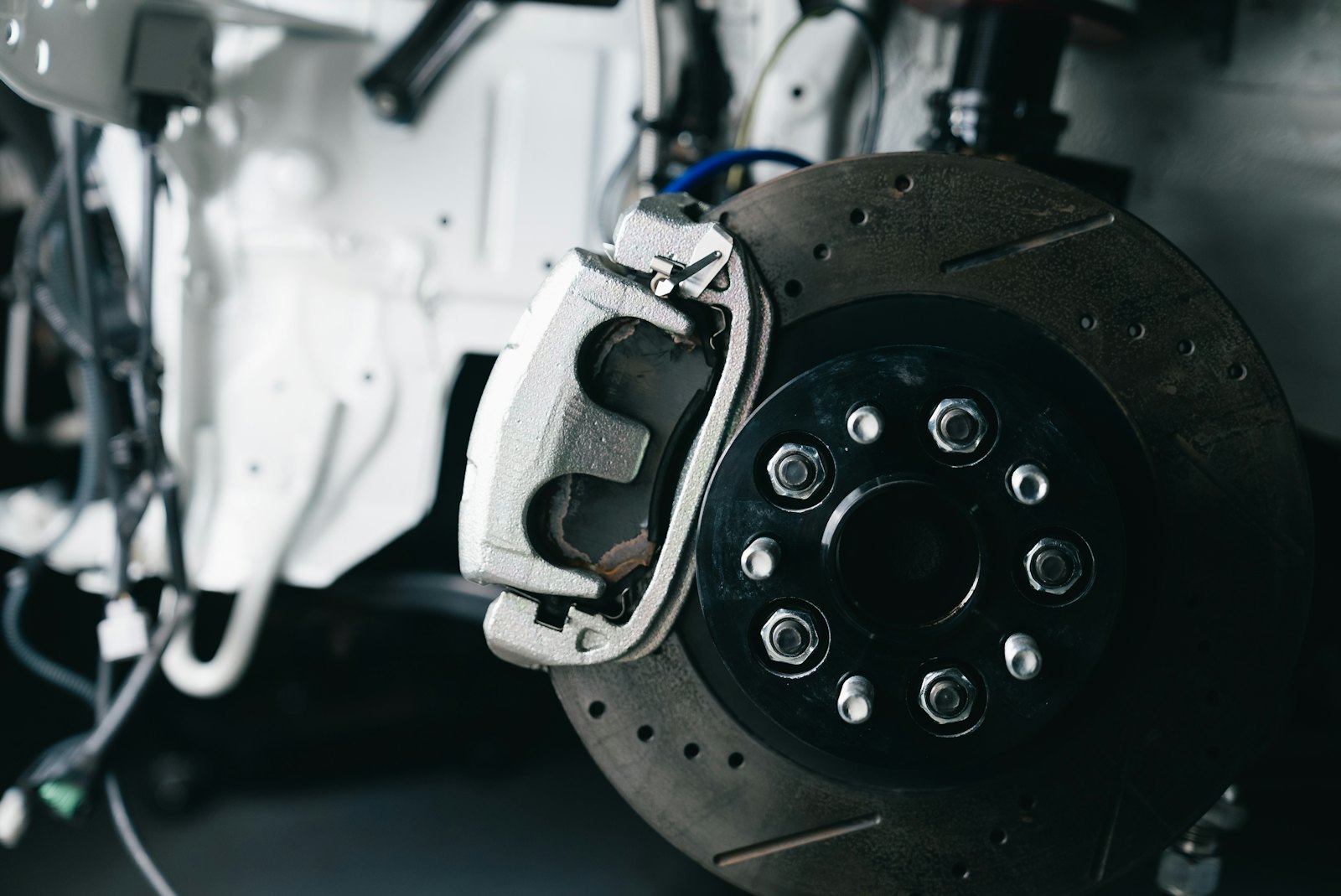
Wheels, suspension, exhaust, body panels: change enough that the type approval no longer fits, and the vehicle is technically illegal until a certified inspector has examined that one car. Germans call it Einzelabnahme.
A flawed expert report doesn't just sit in a filing cabinet. German police may stop modified vehicles, check the modifications against the expert report and immobilise the car on the spot. In the worst case the evening ends on a flatbed truck.
The tuner brings the vehicle to an inspection station. The inspection typically costs €100 to €300.
A certified inspector examines the vehicle against the applicable regulations.
The modifications are held against a hierarchy of rules: law, rule sheets, practice, consensus.
If the vehicle passes, the result is a multi-page expert report of tables and free-text reasoning.
The basis for the decision goes into internal notes for the inspection body's quality assurance.
This is where errors arise: step 3 depends on knowledge that no single document contains, and step 5 is only spot-checked.
Four levels of regulation
Level 1 · What is permissible
Versioned, citable law: EU directives, the German vehicle code (StVZO), ECE regulations. The bedrock, but abstract and written in legalese.
BMW 320i E90 · 8.5J × 19, ET 35, 12 mm wheel spacer
The legal basis is § 19 Abs. 3 Nr. 4 StVZO: modifications can be approved via a part-specific expert report. Behind it sit ECE R30 for passenger car tyres and R13 and R79 for braking and steering. The law says nothing about this BMW with this spacer.
Level 2 · What to measure
Technical rules and Merkblätter, the inspection bodies' information sheets, translate the law into criteria an inspector can actually measure.
VdTÜV Merkblatt 751 · Annex I
14 individual tests from I.5.1.1 to I.5.1.14 for a wheel and tyre modification: wheel strength, mounting geometry, clearance (at least 4 mm to suspension parts, 6 mm to other components), speedometer tolerance, brake thermal load, ESP function.
Level 3 · When it becomes relevant
How inspectors actually decide. Thresholds and precedents built over years of experience, written down in internal notes at best.
VW Golf VII · Coilover suspension
Merkblatt 751 (I.5.1.11) requires that stability control remains functional. It does not say at which ride-height drop to test it actively. Practice has settled at roughly 40 mm.
Level 4 · What everyone accepts
TÜV, DEKRA, GTÜ and KÜS compete for the same customers and share the same legal authority. Where they agree, a de facto standard emerges that no statute spells out.
Tesla Model 3 · Lowering springs
ECE R10 (electromagnetic compatibility) and R100 (electric powertrain safety) apply to every EV. The inspection bodies have collectively classified both as out of scope for a tuning expert report: they are covered by the manufacturer's type approval.
An expert report that satisfies Level 1 but contradicts Level 3 fails the internal audit.
An expert report that follows Level 3 but ignores Level 1 is legally void.
You need all four. Autocomply reasons across all four and shows every step.
The engine
Pick a reference case. The engine reads the structured expert report, derives the test plan from the vehicle, the modification and the date of first registration, and checks one against the other.
Sample cases for demonstration. No real customer data, measurements are examples.
The language model helps understand the document.
The rules engine makes the call.
What the software does
Vehicle data, measurements, tested components and the inspector's free-text reasoning are captured as one structured case.
Deterministically: which rules from Levels 1 to 4 should have applied to this vehicle with this date of first registration?
Rules that were missed, misapplied or ignored are flagged before the expert report leaves the building.
Every finding cites the regulation, technical rule or information sheet behind it. There are no black-box answers without a source. The test report exports as a PDF.
With every case and every internal reasoning note, a rule memory grows: which rule applies to which vehicle, which date of first registration and which modification. Practical knowledge that would otherwise retire with an inspector stays in the organisation.
The engine takes over document search and gap-flagging. The assessment and the signature stay with a person. That is not a compromise, it is the design principle: sovereign inspection decisions require an accountable human, and Autocomply is built exactly that way.
Who it's for
Internal audits check samples by hand. Thresholds and precedents live in the heads of experienced colleagues and in scattered notes.
The approval fails over a missing document or a measurement nobody expected. A second appointment, and the customer's car blocks the lift.
Anyone driving or buying a modified vehicle can hardly judge whether the expert report covers every change. The answer arrives at the roadside check.
Small-series manufacturers and importers work out for every vehicle which regulations apply in which version. It ties up engineering time, week after week.
Coverage
The platform
The core is the engine that reasons across four levels. It is built vertical-agnostic and loosely coupled. A new market brings a new rule library and a new corpus, not a new system.
Vertical 1 · live
StVZO § 19 / § 21 · VdTÜV Merkblätter · inspector notes
Four-level reasoning, cited and auditable
Vertical 2 · live
EU MDR / IVDR · harmonised standards · reviewer corpus
Extensible
New rule library, new corpus, same engine
Every regulated industry shows the same picture: there is software for Levels 1 and 2 that stores and routes documents. And there are people for Levels 3 and 4 who bill by the hour. Nobody else offers interpretation as cited, auditable software.
Autocomply fills that quadrant.
 Interpretation as cited, auditable software. Levels 1 to 4.
Medical devices share the structure of vehicle approval: competing certification bodies with the same authority, among them the same houses as in the vehicle world. The trigger is the same. The gap opens as soon as the standard rulebook stops applying: with a novel device, and with entry into a new market. Autocomply shows before submission what a Notified Body will require, with the rules cited.

“It is highly dependent on the reviewer. Half a year later almost the same dossier, same Notified Body, gets a completely different result.”
“Two auditors, same ISO 13485 rule: one says this is the way; years later another says the opposite.”
“Different consultants read the same regulations differently.”
Quotes from practitioner calls on three continents, June 2026.
The founder
Founder, Autocomply GmbH · Hamburg
“The gap between the rules and how things actually get built is where the most valuable software in the world gets created.”
Electrical engineering at RWTH Aachen, plus business administration. 25 years of building hardware companies on three continents. Commercial helicopter pilot. For him homologation is not a market segment, it is weekly business.
Founded near Hamburg. Built German motorcycle production from the ground up, plus the autonomous shuttle Busbee.
Managing Director. European launch of Olli, the 3D-printed autonomous minibus.
KBA-accredited, ISO 9001 certified vehicle manufacturer for classes M, L and O.
The RegTech platform for vehicle homologation.
Frequent questions
No. A language model helps understand the document, for instance the inspector's free-text reasoning. Whether a rule applies and is met is decided by a deterministic rules engine. Same case, same result, with a traceable derivation.
No. It takes search and cross-checking off their desk and shows where an expert report deviates from rule or practice. The assessment and the signature stay with the accountable person.
State-accredited private inspection organisations. The major players are TÜV, DEKRA, GTÜ and KÜS, together known as technical services. They compete for the same customers but share the same legal authority, which is why consensus among them carries so much weight.
From the reports of many inspectors and from their anonymised internal reasoning notes. Where the houses decide alike, the consensus is kept as its own labelled level and never mixed with legal text.
Wheel and tyre modifications, suspension, exhaust and body: the full modification scope under § 19 and § 21 StVZO, for Germany, Austria and Switzerland.
Regulations apply in versions. Which rule applies to a vehicle depends on when it was first registered. The test plan is therefore always generated for the specific vehicle with its date.
With a demo on your own cases. Inspection bodies and workshops work with per-seat licences, vehicle owners check single expert reports without a subscription.
Book a demo
In 30 minutes we show you Autocomply on your own expert reports: test plan, check and verdict, every step with its source.